Tulsi Vivah
Tulsi Vivah is a traditional Hindu ceremonial festival celebrated primarily in India. It marks the symbolic marriage of the holy basil plant (Tulsi) to Lord Vishnu or his avatar Krishna.
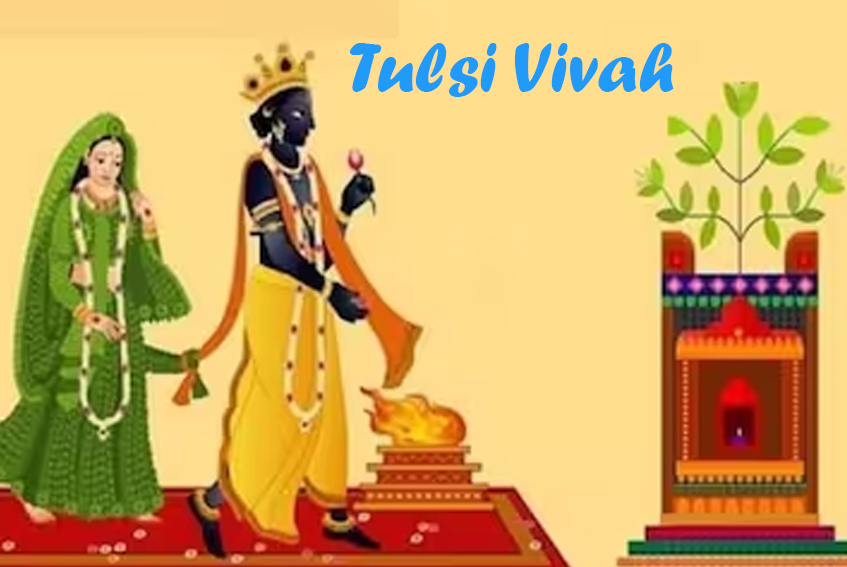
- Sacred Plant: Tulsi (holy basil) is considered a sacred plant in Hinduism, believed to be an incarnation of Goddess Lakshmi, the consort of Lord Vishnu.
- Marriage Symbolism: The festival symbolizes the ceremonial marriage of Tulsi to Vishnu or Krishna, representing the union of the divine couple.
Tulsi Vivah is typically celebrated on the Ekadashi (11th day) of the Hindu month of Kartik, which falls between October and November.
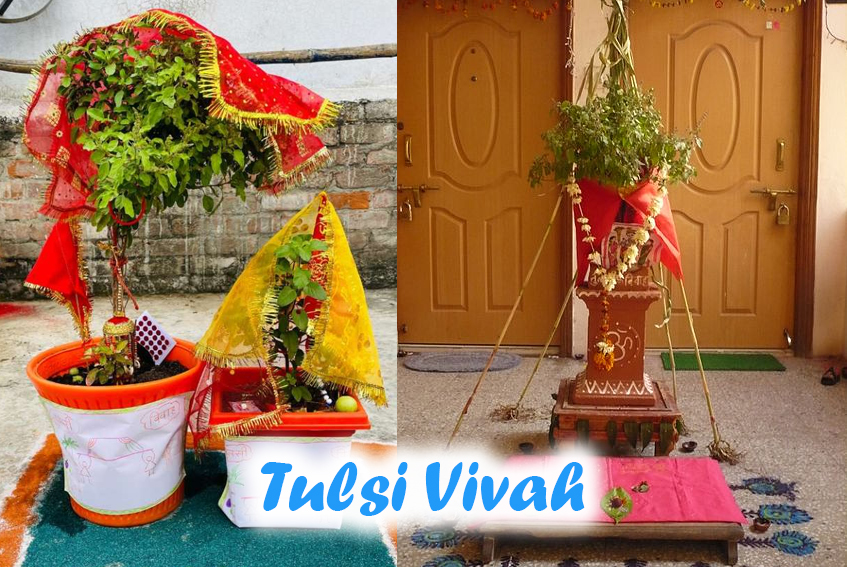
Rituals
- Marriage Ceremony: A ceremonial wedding ritual is performed where a Tulsi plant is decorated as a bride and tied to a symbolic representation of Lord Vishnu or Krishna.
- Puja and Mantras: Devotees perform rituals, recite prayers, and sing hymns dedicated to Lord Vishnu and Tulsi, seeking blessings for a happy and prosperous life.
Cultural Customs:
- Devotional Songs and Bhajans: Special devotional songs and hymns praising Lord Vishnu and Tulsi are sung during the celebrations.
- Offerings: Devotees offer sweets, fruits, flowers, and other items to the Tulsi plant and the deities as part of the prayers.
Regional Variations:
- Diverse Practices: Different regions in India have their own unique customs and ways of celebrating Tulsi Vivah, adding regional flavors and traditions to the festival.
Spiritual Significance:
- Tulsi Vivah is considered auspicious, and participating in the rituals is believed to bring blessings, marital harmony, and prosperity to the households.
Social and Community Aspect:
- The festival also serves as a community gathering, bringing together families and neighbors who participate in the rituals and share festive joy.